
What Is SD-WAN and Why Should Your Finance or Banking Organisation Care?
What Is SD-WAN and Why Should Your Finance or Banking Organisation Care?
Introduction
Banks and financial institutions in India operate some of the country's largest and most complex distributed networks, connecting hundreds or even thousands of branch offices, ATMs, regional offices, and data centres. Traditionally, MPLS leased lines have been the preferred choice for secure branch connectivity. However, the rapid growth of cloud applications, digital banking, and increasing bandwidth demands has made traditional WAN architectures expensive and difficult to scale.
Software-Defined Wide Area Networking (SD-WAN) is transforming how financial institutions build and manage their networks by delivering greater flexibility, stronger security, improved application performance, and significant cost savings.
The BFSI WAN Challenge
Banks require highly secure and reliable connectivity for mission-critical applications such as Core Banking Systems (CBS), ATM networks, payment gateways, and financial transactions. At the same time, they must support growing bandwidth requirements for services including digital banking, video KYC, cloud-based applications, collaboration platforms, and remote workforce connectivity.
Traditional MPLS circuits provide dependable performance but are expensive, slow to provision, and often lack the flexibility required for today's digital banking environment. Expanding branch networks using only MPLS significantly increases operational costs.
How SD-WAN Solves the BFSI Challenge
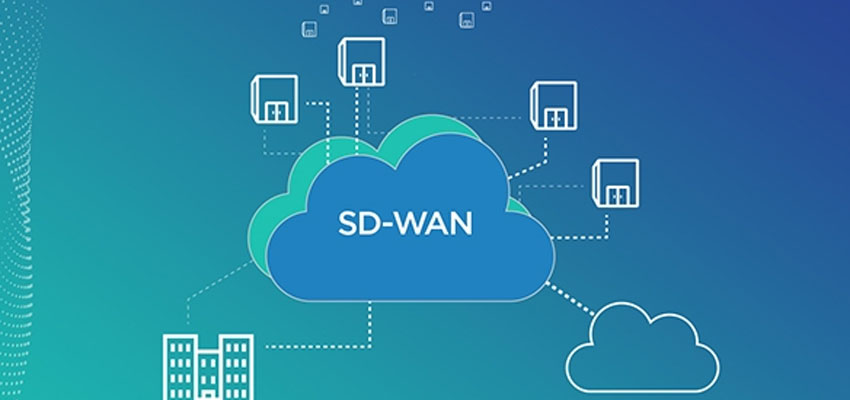
SD-WAN enables financial institutions to combine multiple connectivity options—including MPLS, broadband Internet, fiber, and 4G/5G links—into a single intelligent network. Critical banking applications are automatically routed over the most reliable and secure connection, while non-critical traffic uses lower-cost Internet links.
This intelligent traffic management improves application performance while reducing WAN operating costs by as much as 30–60%. Branch deployment also becomes significantly faster, allowing new locations to be connected within hours instead of waiting weeks for dedicated leased lines.
Modern SD-WAN platforms integrate advanced security capabilities such as Next-Generation Firewall (NGFW), Intrusion Prevention System (IPS), secure VPN tunnels, web filtering, and application-aware traffic policies. This ensures every branch maintains a consistent security posture without deploying multiple standalone security appliances.
RBI Compliance and Security
The Reserve Bank of India's cybersecurity framework requires financial institutions to implement strong perimeter security, encrypted communication channels, continuous monitoring, and comprehensive audit logging.
Leading SD-WAN solutions from vendors such as Cisco, Fortinet, and VMware provide end-to-end encrypted tunnels between branches, centralized security policy management, real-time monitoring, and detailed event logging. These capabilities simplify compliance with RBI cybersecurity requirements while strengthening overall network resilience.
Business Benefits Beyond Connectivity
Beyond reducing WAN costs, SD-WAN improves application availability, simplifies network management, enhances disaster recovery capabilities, and provides better visibility into application performance across every branch. Financial institutions also gain the flexibility to adopt cloud services, hybrid work models, and digital transformation initiatives without compromising security.
Conclusion
For banks, NBFCs, insurance companies, and other financial institutions managing distributed branch networks, SD-WAN has become a strategic technology rather than an optional upgrade. It delivers secure, scalable, and high-performance connectivity while significantly lowering operational costs and simplifying branch management.
Choosing the right SD-WAN architecture and implementation partner ensures organisations achieve maximum return on investment while maintaining compliance with India's evolving cybersecurity and regulatory requirements.
--- AdminPearlnet India designs, deploys, and manages secure SD-WAN solutions for Banks, NBFCs, Insurance Companies, and Financial Institutions across India. Contact our networking experts for a comprehensive WAN performance and cost optimization assessment.