
CCTV in India — Moving from Analog to IP and Getting It Right
CCTV in India — Moving from Analog to IP and Getting It Right
Introduction
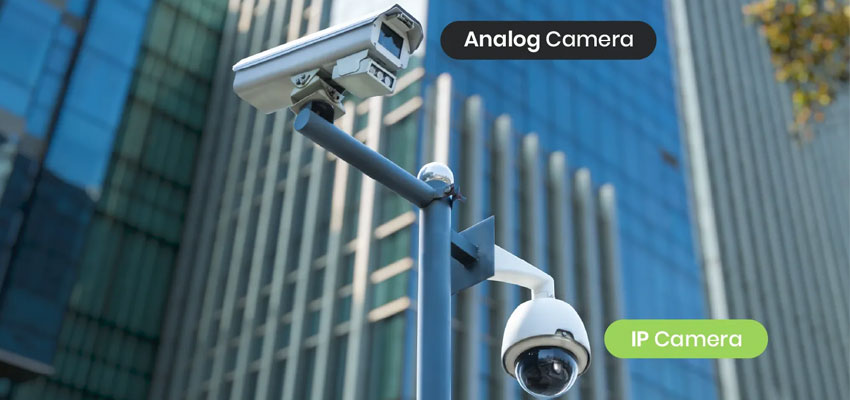
India's commercial, government, and public sectors are rapidly transitioning from traditional analog CCTV systems to modern IP-based surveillance solutions. Legacy analog cameras often suffer from limited image resolution, poor night vision, and proprietary DVR systems that restrict scalability and remote management.
Modern IP CCTV systems deliver superior image quality, centralized monitoring, intelligent video analytics, remote accessibility, and seamless integration with access control and other security platforms. However, successful migration requires careful planning, proper network infrastructure, and correct equipment selection. This guide explains the key considerations for organisations planning an IP CCTV deployment or technology upgrade.
Why Resolution Matters More Than You Think
One of the biggest reasons CCTV systems fail during investigations is inadequate image resolution. After an incident, organisations often discover that recorded footage cannot clearly identify faces or vehicle registration numbers because the wrong camera specifications were selected.
For general surveillance, 2MP (1080p) cameras provide reliable coverage. Areas requiring facial identification, vehicle number plate recognition, or forensic investigations should use 4MP, 8MP (4K), or professional varifocal cameras positioned correctly.
For large campuses, industrial sites, parking areas, and perimeter security, PTZ (Pan-Tilt-Zoom) cameras offer flexible monitoring through operator-controlled movement and automated patrol patterns.
The Network Infrastructure for IP CCTV
Unlike analog systems, IP cameras rely entirely on network connectivity. Camera bandwidth varies from approximately 1–2 Mbps for standard Full HD cameras to 8–15 Mbps for high-frame-rate 4K cameras. Network switches, fiber backbones, and Network Video Recorders (NVRs) must be designed to support the combined bandwidth of all connected cameras.
Power over Ethernet (PoE) simplifies installation by delivering both power and data through a single Ethernet cable, reducing wiring costs and improving system reliability. When selecting PoE switches, ensure they provide sufficient total power budget to support every connected camera.
Storage Calculation and Retention Policy
Storage planning is one of the most overlooked aspects of CCTV projects. Storage requirements depend on the number of cameras, image resolution, frame rate, recording schedule, video compression, and retention period.
Modern H.265 video compression reduces storage consumption by nearly 50% compared to H.264 while maintaining similar image quality. Choosing H.265-compatible cameras and NVRs significantly lowers long-term storage costs.
For most commercial and government deployments in India, a minimum recording retention period of 30 days is recommended. Critical infrastructure, healthcare, transportation, and high-security facilities often require storage retention of 60 to 90 days.
Video Analytics — Where the Real Value Lies
Modern IP surveillance systems do far more than record video. Built-in intelligent analytics enable automated motion detection, intrusion alerts, virtual perimeter protection, crowd monitoring, people counting, facial recognition, and automatic number plate recognition (ANPR).
These intelligent features significantly reduce the workload of security personnel while enabling faster incident detection and response. For large campuses, manufacturing facilities, airports, hospitals, educational institutions, and smart cities, video analytics transforms CCTV from a passive recording system into a proactive security platform.
Conclusion
A professionally designed IP CCTV solution provides reliable surveillance, improved operational visibility, and enhanced security for years to come. Success depends on selecting the correct camera resolution, designing a scalable network infrastructure, accurately calculating storage requirements, and ensuring expert installation.
Cutting corners during system design often results in poor image quality, insufficient storage, network bottlenecks, and unreliable performance when evidence is needed most. Investing in the right technology from the beginning delivers greater long-term value and stronger security outcomes.
--- AdminPearlnet India designs, installs, and maintains enterprise IP CCTV surveillance solutions for Government, Healthcare, Education, Transportation, Manufacturing, and Commercial organisations across India. Contact our security experts for a comprehensive surveillance system consultation.